Category Archives: culture
Friendship’s End
What else is there to record in a life except its possibilities for friendship? With what else could the political art be concerned? How else to measure a society or its relations between the sexes? I am in the midst … Continue reading →
Posted in absurdism, action, alienation, anthropology, art of living, atheism, autonomy, bad faith, beauty, Biblical God, bigotry, chivalry, cities, class, conformism, contemplation, contradictions, cool, courage, courtship, cultural politics, culture, desire, dialectic, erotic life, eternity, ethics, evil, existentialism, exploitation, faith, fashion, female power, femininity, feminism, freedom, friendship, gender balance, glitterati, guilt and innocence, health, hidden God, hierarchy, history of ideas, id, Idealism-, ideality, identity, immorality, immortality, institutional power, Jews, legal responsibility, life and death struggle, love, male power, masculinity, master/slave relation, memory, mind control, modern women, modernism, moral action, moral evaluation, moral psychology, morality, mortality, motherhood, non-violence, ontology, oppression, past and future, peace, philosophy, political, political movements, politics of ideas, postmodernism, power, presence, promissory notes, propaganda, psychology, public facade, public intellectual, reductionism, relationships, religion, roles, romance, romantic love, secular, seduction, self-deception, sex appeal, sexuality, social climbing, social construction, social conventions, social ranking, spiritual journey, spiritual not religious, spirituality, status, status of women, suffering, terror, the examined life, the problematic of men, the problematic of woman, the profane, the sacred, theism, time, twentieth century, twenty-first century, Utopia, victimhood, violence, work, writing, Zeitgeist
|
Tagged a southern lady, abandoned by friends, avoiding cynicism, becoming one's mother, blocking transcendence, bridging differences, brink of womanhood, bubble of privilege, cold hospitality, coming of age, damaged friendship, devout atheist, ego and friendship, ending a friendship, fearing a friend, feeling abandoned, female rivalry, feminine coming of age, feminine happiness, friendship and political differences, friendship and relations between the sexes, Fulbright scholars, girlhood and adulthood, girls and mothers, girls coming of age, group mores, healthy friendship, hopes of reunion, idealism disappointed, importance of friendship, lifelong friendships, maternal coldness, maternal hatred, mother daughter relations, newlywed shocks, philosophical friends, politics and friendship, providential coincidence, rationalizing pogroms, religious bullying, riding roughshod, romantic longing, shared past, social expectations, social ranking, testing someone's tolerance, transcendence and feminity, trendy anti-semitism, true love, unshared future, women friends, women victimizing women, worldliness versus idealism, worldly skills, young Americans in Paris, young girls in flower, youthful hopes
|
2 Comments
Ancestors
How odd of God To choose the Jews. So goes the old rhyming joke, from I dunno who. Some Englishman perhaps. But allow me to step in, on behalf of God, to explain why God did that. My explanation may count as … Continue reading →
Posted in Absolute Freedom and Terror, absurdism, academe, action, afterlife, alienation, art, art of living, atheism, autonomy, bad faith, beauty, Bible, Biblical God, bigotry, book reviews, books, childhood, cities, class, conformism, contemplation, contradictions, cool, courage, cultural politics, culture, desire, dialectic, erotic life, eternity, ethics, evil, existentialism, exploitation, faith, fashion, female power, femininity, freedom, friendship, gender balance, glitterati, Gnosticism, guilt and innocence, hegemony, heroes, hidden God, hierarchy, history, history of ideas, Idealism-, ideality, identity, ideology, idolatry, immorality, immortality, institutional power, Jews, Judaism, law, legal responsibility, life and death struggle, literature, love, male power, martyrdom, masculinity, master/slave relation, memoir, memory, mind control, modern women, modernism, moral action, moral evaluation, moral psychology, morality, mortality, motherhood, nineteenth-century, ontology, oppression, past and future, philosophy, political, political movements, politics, politics of ideas, postmodernism, power, presence, propaganda, psychology, public facade, public intellectual, race, reading, reductionism, relationships, religion, roles, romance, romantic love, secular, self-deception, sex appeal, social climbing, social construction, social conventions, social ranking, spiritual journey, spiritual not religious, spirituality, status, status of women, suffering, terror, the examined life, the problematic of men, the problematic of woman, the profane, the sacred, theism, theology, time, twentieth century, twenty-first century, victimhood, victims, violence, war, work, writing, Zeitgeist
|
Tagged Abrahamic religion, ancestors, being above it, bible as historical, Book of Job, chief rabbi of Odessa, chosen people, cost of life choices, covenant as divine partnership, covenant with God, divine connections, divine to human relationship, drama of assimilation, Edmund de Waal's The Hare With Amber Eyes: A Hidden Inheritance, empathy with God, family mysteries, family puzzle pieces, Family secrets, fleeing Europe, following one's heart, generational memory, God and Abraham, God in history, God in meditation, God in nature, God outside the Bible, God's footprints in history, hidden epic, history as record of action, history as record of deeds, How odd of God, inherited duties, inherited roles, inherited sorrows, Jewish destiny, Jewish genius, Jewish history, Jewish predicaments, Jewish vulnerability, Jewish week of mourning, Jews agree to the covenant, Jews and insult, Jews consent to covenant, Jews in Vienna, Jews record the covenant, justifying God, lech lecha, lifelong friendship, love or duty, native born Israeli, Nazi genocide, Neve Granot, personal affinities, Rav Tsair, Rechov Rav Tsair, religious chanting, religious rituals, Sabra, Shiva, sympathy with God, the covenant as partnership with God, the Jewish assignment, theodicy, Tom Stoppard, Tom Stoppard's Leopoldstadt, Viennese roots, walking a social tightrope, wealth as protection, Wittgensteins of Vienna, writers' conversation
|
3 Comments
God’s Orders
God’s Orders In the past fortnight, I did something whose consequence makes it possible for me to return to the temple from which I’d walked away last March. I had private zoom conversations with two temple leaders who had, I … Continue reading →
Posted in Absolute Freedom and Terror, absurdism, academe, action, afterlife, alienation, art of living, atheism, autonomy, bad faith, beauty, Biblical God, bigotry, books, bureaucracy, chivalry, class, conformism, contemplation, contradictions, cool, courage, courtship, cultural politics, culture, desire, dialectic, eighteenth century, erotic life, eternity, ethics, evil, existentialism, exploitation, faith, fashion, female power, femininity, feminism, freedom, friendship, gender balance, glitterati, guilt and innocence, health, hegemony, heroes, hidden God, hierarchy, history of ideas, idealism, ideality, identity, ideology, idolatry, immorality, immortality, institutional power, Jews, journalism, Judaism, law, legal responsibility, life and death struggle, literature, love, male power, martyrdom, masculinity, master, memoir, memory, mind control, modern women, modernism, moral action, moral evaluation, moral psychology, morality, ontology, oppression, past and future, peace, philosophy, politics of ideas, postmodernism, power, presence, promissory notes, propaganda, psychology, public facade, public intellectual, radicalism, reading, reductionism, relationships, religion, roles, romance, scientism, secular, seduction, self-deception, sex appeal, sexuality, social climbing, social construction, social conventions, social ranking, sociobiology, spiritual journey, spiritual not religious, spirituality, status, status of women, suffering, terror, the examined life, the problematic of men, the problematic of woman, the profane, the sacred, theism, theology, time, twentieth century, twenty-first century, Utopia, victimhood, victims, work, writing, Zeitgeist
|
Tagged a woman's honor, Aristotelian view, Aristotle, Aristotle's Ethics, bad actor, balm in Gilead, Being oneself, Bible movies, blaming the messenger, Chabad, Charlton Heston, clearing misunderstandings, commandments and consent, congregational leadership, connection repair, Divine closeness, divine commands, freedom of the will, getting accountability, God's commands v human freedom, God's instructions, God's orders, hamsin, honor satisfied, hot desert wind, Immanuel Kant, Kant's Critique of Practical Reason, Kantian view, knowing when to walk away, personal boundaries, prayer guidance, pre-modern purity of spirit, private wounds, resisting God's pressure, righteous combat, separate peace, suffering and healing, temple leadership, the believer's autonomy, The Ten Commandments movie, theism and naturalism, transformation of Moses, trauma
|
3 Comments
Does Anti-Semitism Have Sex Appeal?
Does Anti-Semitism Have Sex Appeal? Is it sexy to be anti-semitic? Well, it must be, since it’s a mode of organizing human desire that just won’t quit. In bygone times, when distaste for all-things-Jewish was naively proud of itself, it … Continue reading →
Posted in Absolute Freedom and Terror, absurdism, academe, action, afterlife, alienation, American politics, anthropology, art, art of living, atheism, autonomy, bad faith, Bible, Biblical God, bigotry, books, childhood, chivalry, Christianity, conformism, contemplation, contradictions, cool, courage, cults, cultural politics, culture, desire, dialectic, erotic life, eternity, ethics, evil, existentialism, exploitation, faith, fashion, glitterati, Gnosticism, guilt and innocence, hegemony, heroes, hidden God, history, history of ideas, idealism, ideality, identity, ideology, idolatry, immorality, Jews, Judaism, life and death struggle, literature, martyrdom, masculinity, memoir, mind control, modern women, modernism, moral action, moral evaluation, moral psychology, morality, oppression, past and future, political movements, politics of ideas, postmodernism, power, presence, propaganda, psychology, public facade, public intellectual, race, reading, reductionism, relationships, religion, roles, secular, seduction, self-deception, sex appeal, sexuality, social climbing, social construction, social conventions, social ranking, spiritual journey, spiritual not religious, spirituality, status, status of women, suffering, terror, the examined life, the problematic of men, the problematic of woman, the profane, the sacred, theism, theology, time, twentieth century, twenty-first century, Utopia, victimhood, victims, violence, war, work, writing, Zeitgeist
|
Tagged Anthony Trollope, anti-semitism, anti-semitism as a bad look, betraying the covenant, Bible movies, blaming Jews for the Holocaust, bohemian circles, Chaucer, conversion as an option, covenant in history, Dickens, difficulties of real life, Edgar Degas, envy of Jews, eros of the covenant, evil and human desire, false gods, fashionable anti-semitism, golden calf scene, hitting bottom, Holocaust, human desire, insincere envy, Jews as chosen, keeping the covenant, literary anti-semitism, loving dead Jews, partnering with God, pre-war anti-semitism, sex appeal, sex appeal of anti-semitism, Shakespeare, social anti-semitism, the Jewish vocation, tolerance and prejudice, when anti-semitism was unfashionable
|
3 Comments
What a Woman Needs is Philosophy
What a Woman Needs is Philosophy Let’s say there is some connection between how you live and what you think. And let’s say philosophy, which in Greek means love of wisdom, gives you the chance to see how your own … Continue reading →
Posted in Absolute Freedom and Terror, absurdism, academe, action, alienation, anthropology, art of living, autonomy, bad faith, bigotry, books, childhood, chivalry, conformism, contradictions, cool, courage, courtship, cultural politics, culture, desire, dialectic, erotic life, eternity, ethics, evil, existentialism, exploitation, faith, fashion, female power, femininity, feminism, freedom, friendship, gender balance, glitterati, Gnosticism, guilt and innocence, health, hegemony, heroes, hidden God, hierarchy, history of ideas, idealism, ideality, identity, ideology, idolatry, institutional power, journalism, law, legal responsibility, life and death struggle, literature, love, male power, masculinity, master, master/slave relation, memoir, memory, mind control, modern women, modernism, moral action, moral evaluation, moral psychology, morality, ontology, oppression, past and future, peace, philosophy, political movements, politics of ideas, postmodernism, power, presence, promissory notes, propaganda, psychology, public facade, public intellectual, radicalism, reading, reductionism, relationships, roles, romance, romantic love, scientism, secular, seduction, self-deception, sex appeal, sexuality, slave, social climbing, social construction, social conventions, social ranking, sociobiology, spiritual journey, spiritual not religious, spirituality, status, status of women, suffering, terror, the examined life, the problematic of men, the problematic of woman, the profane, the sacred, theism, theology, time, twentieth century, twenty-first century, Utopia, victimhood, work, writing, Zeitgeist
|
Tagged age of innocence, assessing world views, belief systems, biological differences, civilizational layers, cultural locales, culture and belief, deciphering one's culture, deciphering philosophy, evaluating beliefs, getting one's philosophic bearings, History of Philosophy, human culture, influential thinkers, intellectual strategies, learning to survive, life ambitions, life and thinking, life and thought, life problematic, lifemanship, loss of innocence, love of wisdom, male and female strength, paying for college, paying for higher ed, personal and philosophical, personal history, philosophic argument, Philosophy 101, philosophy and personal life, philosophy personified, philosophy's problematic, revising world views, revisiting childhood, self-assessment, self-liberation, social survival, strategic thinking, surviving youth, time travel, understanding people, women and philosophy, women's strategies, Women's Studies, you are what you think
|
3 Comments
As If We Were Free
As If We Were Free We are just back from the pleasant French city of Montreal in Canada, where Jerry and I gave papers and attended the presentations of others at the meetings of the Eric Voegelin Society, a group … Continue reading →
Posted in Absolute Freedom and Terror, absurdism, academe, action, afterlife, alienation, American politics, art of living, atheism, autonomy, bad faith, bigotry, bureaucracy, cities, class, conformism, contemplation, contradictions, cool, courage, cults, cultural politics, culture, desire, dialectic, erotic life, eternity, ethics, evil, existentialism, exploitation, faith, fashion, female power, femininity, feminism, freedom, friendship, gender balance, glitterati, Gnosticism, guilt and innocence, hegemony, heroes, hidden God, hierarchy, history, history of ideas, idealism, ideality, identity, ideology, idolatry, immorality, institutional power, journalism, law, legal responsibility, life and death struggle, literature, love, male power, martyrdom, masculinity, master/slave relation, memory, Messianic Age, mind control, modern women, modernism, moral action, moral evaluation, moral psychology, morality, novels, ontology, oppression, past and future, Phenomenology of the Mind, philosophy, poetry, political, political movements, politics, politics of ideas, postmodernism, power, presence, propaganda, psychology, public facade, public intellectual, radicalism, reading, reductionism, relationships, roles, romantic love, secular, seduction, self-deception, sex appeal, sexuality, social climbing, social construction, social conventions, social ranking, spiritual journey, spiritual not religious, spirituality, status, status of women, suffering, terror, terrorism, the examined life, the problematic of men, the problematic of woman, the profane, the sacred, theism, theology, time, twentieth century, twenty-first century, Utopia, victimhood, victims, violence, war, work, writing, Zeitgeist
|
Tagged academic horror stories, American Political Science Association, anonymous denunciation, apocalyptic fantasies, behaving as if free, Canada, coerced confessions, Czech dissidents, denounced anonymously, denouncer and denouncee, Eric Voegelin, Eric Voegelin Society, escaping the human condition, escaping the Nazis, existential questions, hard to be human, ideological path, ideology-driven regimes, imprisonments, life assignment, loyalty to the party, mass executions and gulags, materialist cynicism, materialist reductionism, mock trials, Montreal, moral defeat, Nazism and communism, no one is safe, no-longer-sayable, one-man rule, ostracism, penumbra of fear, pointless sacrifice, police state, political philosophers, political theorists, professional risks, social defeat, social eviction, social risks, soul-destroying ideologies, struggles for freedom, the fellowship of truth tellers, totalizing programs, utopian delusions, Václav Havel, Venezuela and Cuba, where to draw the line
|
1 Comment
Putting Order Into History
Putting Order Into History Aviva Zornberg has written another of her inspired books about the Bible, this one suggestively titled, The Beginning of Desire: Reflections on Genesis. Why read the Bible? Isn’t it a just collection of stories that … Continue reading →
Posted in Absolute Freedom and Terror, absurdism, academe, action, afterlife, alienation, American politics, art of living, atheism, autonomy, bad faith, Bible, Biblical God, bigotry, books, childhood, cities, class, conformism, contemplation, contradictions, cool, courage, cults, cultural politics, culture, desire, dialectic, erotic life, eternity, ethics, evil, existentialism, exploitation, faith, fashion, female power, femininity, feminism, freedom, friendship, gender balance, glitterati, guilt and innocence, Hegel, hegemony, heroes, hidden God, hierarchy, history, history of ideas, idealism, ideality, identity, ideology, idolatry, immorality, immortality, institutional power, Jews, law, legal responsibility, life and death struggle, literature, love, male power, masculinity, memory, mind control, modern women, modernism, moral action, moral evaluation, moral psychology, morality, mortality, motherhood, ontology, oppression, past and future, peace, Phenomenology of the Mind, philosophy, political, political movements, politics, politics of ideas, postmodernism, power, presence, propaganda, psychology, public facade, public intellectual, radicalism, reading, reductionism, relationships, religion, roles, secular, seduction, self-deception, sex appeal, social conventions, social ranking, spiritual journey, spiritual not religious, spirituality, status, status of women, suffering, terror, the examined life, the problematic of men, the problematic of woman, the profane, the sacred, theism, theology, time, TV, twentieth century, twenty-first century, victimhood, victims, violence, war, work, writing, Zeitgeist
|
Tagged Adam's sin, aesthetic attitude, Aristole's "rout in battle", Aviva Zornberg's The Beginning of Desire: Reflections on Genesis, Bible stories, biblical truth, book of Genesis, choice in history, Churchill v Hitler, clarifying the before and after, confidence in democracy, confronting reality, democracy v demagoguery, democratic civilization, facing chaos, faith in the ballot, faith in the courts, holding off chaos, human incompleteness, January 6th Hearings, January 6th mob, joining the rout, knowing what to do, Liz Cheney, making order, making sense, making situations intelligible, meaning of history, mob rule, moral chaos, moral choice, Noah's flood, Noah's generation, observing v acting, Odessa, only human, order in history, order out of chaos, providing evidence, resisting God, Russian aristocrats, Russian invasion of Ukraine, seeing the pattern, standing with Ukraine, the order of battle, Tsarist Russia, Ukraine and historic Russia, Ukrainian defenders, Western leaders and Ukraine, what really happened?, who did what?, who said what?, world historical hero, Zelensky
|
2 Comments
Rachel at the Well
Rachel at the Well Some years ago, Jerry and I had dinner in Washington D.C. with a learned and accomplished professorial couple who’d been married and deeply in love for their whole blessed lifetime. The conversation turned to a topic … Continue reading →
Posted in absurdism, academe, action, alienation, anthropology, art, art of living, atheism, autonomy, bad faith, beauty, Bible, Biblical God, bigotry, books, chivalry, cities, class, conformism, contemplation, contradictions, cool, courage, courtship, cultural politics, culture, desire, dialectic, erotic life, eternity, ethics, evil, existentialism, exploitation, faith, fashion, female power, femininity, feminism, films, freedom, friendship, gender balance, glitterati, Gnosticism, guilt and innocence, health, hegemony, heroes, hidden God, hierarchy, history of ideas, idealism, ideality, identity, ideology, immorality, immortality, Jews, Judaism, legal responsibility, life and death struggle, literature, love, male power, masculinity, master, mind control, modern women, modernism, moral action, moral evaluation, moral psychology, morality, motherhood, mysticism, nineteenth-century, novels, ontology, past and future, peace, philosophy, politics of ideas, postmodernism, power, presence, propaganda, psychology, public facade, public intellectual, reading, reductionism, relationships, religion, roles, romance, romantic love, secular, seduction, self-deception, sex appeal, sexuality, social climbing, social construction, social conventions, social ranking, spiritual journey, spiritual not religious, spirituality, status, status of women, suffering, terror, the examined life, the problematic of men, the problematic of woman, the profane, the sacred, theism, theology, time, twentieth century, twenty-first century, victimhood, victims, work, writing, Zeitgeist
|
Tagged a mother's care, advice to students, bashert, becoming Jewish, becoming Jewish orthodox, Charlotte Bronte's "Jane Eyre", courtship conditions, covenant, covenant as absolute, dream messages, duped into marriage, eligible suitor, fleeing temptation, forceful persuasiveness, good on paper, inside the covenant, Israelite, Jacob and Esau, Jacob and Laban, Jacob and Rachel, laboring 7 years for Rachel, lifetime love, mad woman in the attic, making time one's friend, Marriage, married in all but name, maternal protection, meet the right woman, meeting one's true love, missionary calling, philosophy student, professional couples, Rachel at the well, Reader I married him, romantic love as absolute, romantic love as myth, Self-betrayal, the first Mrs. Rochester, the right track, the truth of self, time and true love, untarnished love, voice from the beyond, wedding impediment, womanly fulfilment
|
4 Comments
No Place Like Home
No Place Like Home My name Abigail means in Hebrew “father’s joy.” Which tells us that, at birth, I’d already received my assignment. Since my father was considered, by a number of his classmates in Columbia University’s stellar class of … Continue reading →
Posted in absurdism, academe, action, afterlife, alienation, anthropology, art of living, autonomy, bad faith, beauty, Biblical God, books, childhood, chivalry, cities, class, conformism, contemplation, contradictions, cool, courage, courtship, cultural politics, culture, desire, dialectic, erotic life, eternity, ethics, evil, existentialism, exploitation, faith, fashion, female power, femininity, freedom, friendship, gender balance, glitterati, guilt and innocence, health, hegemony, heroes, hidden God, hierarchy, history of ideas, idealism, ideality, identity, immortality, institutional power, Jews, Judaism, law, legal responsibility, life and death struggle, love, male power, masculinity, memoir, memory, modern women, modernism, moral action, moral evaluation, moral psychology, morality, mortality, ontology, past and future, philosophy, politics of ideas, postmodernism, power, presence, promissory notes, psychology, public facade, public intellectual, reading, reductionism, relationships, religion, roles, romance, romantic love, secular, sexuality, social climbing, social construction, social conventions, social ranking, spiritual journey, spiritual not religious, spirituality, status, status of women, suffering, the examined life, the problematic of men, the problematic of woman, the profane, the sacred, theism, theology, time, twentieth century, twenty-first century, work, writing, Zeitgeist
|
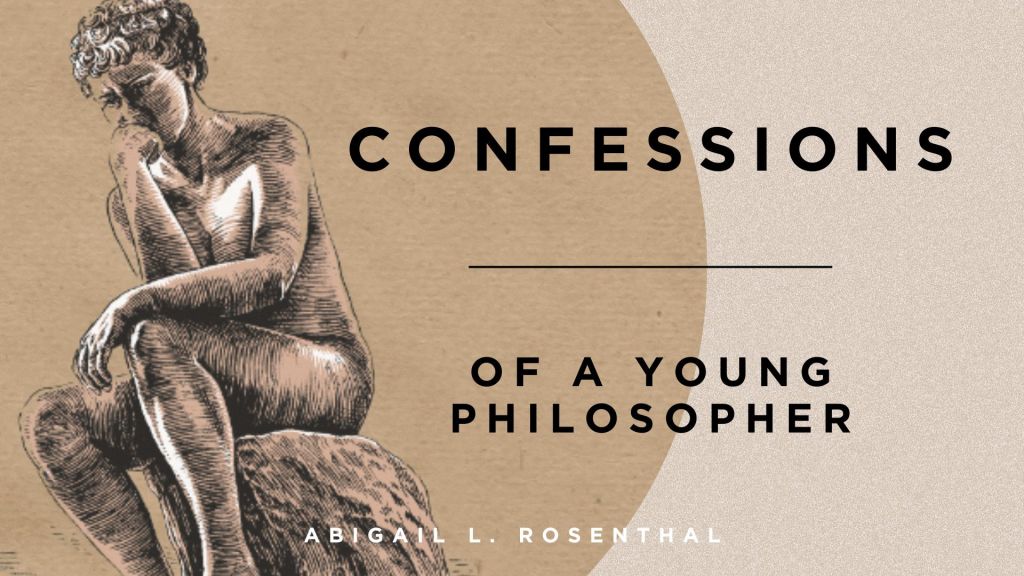
Tagged "father's joy", Abigail, Abigail L. Rosenthal's "A Good Look at Evil", Abigail L. Rosenthal's "Confessions of a Young Philosopher", Augustine’s Confessions, birthright, chip off the old block, class genius, Clifton Fadiman, Columbia University’s class of 1925, Confessions of a Young Philosopher, daughter's chivalry to father, deracinated, earning one's name, father fixation, filial piety, fitting in with the crowd, following one's calling, freedom from parental pressure, Freudian views, girls in fathers' shadow, Henry M. Rosenthal, Henry M. Rosenthal’s Consolations of Philosophy: Hobbes’s Secret; Spinoza’s Way, honoring one's desires, illustrated books, intellectual girls, Jacques Barzun, Jerry L. Martin, Jewish virgins, life assignment, Lionel Trilling, loving philosophy, mainstream Jewish life, maternal expectations, Meyer Schapiro, name meanings, outward religious observance, owning one's name, philosophic conversation, philosophy and the feminine, quitting the rabbinate, religious detachment, romantic fulfillment, romantic happy ending, romantic self-respect, The American Jewish Historical Society, the rabbinate, Whittaker Chambers, women philosophers
|
1 Comment
Desire and Defamation
Desire and Defamation Defamation tends to obliterate the erotic appeal of the person being defamed. That’s one reason it’s so infuriatingly irreparable. It makes the victim seem undesirable. We are social animals. We live by each other’s smiles and frowns. … Continue reading →
Posted in Absolute Freedom and Terror, absurdism, academe, action, alienation, American politics, art of living, atheism, autonomy, bad faith, beauty, Biblical God, bigotry, book reviews, books, bureaucracy, class, conformism, contemplation, contradictions, cool, courage, courtship, cults, cultural politics, culture, desire, dialectic, erotic life, eternity, ethics, evil, existentialism, exploitation, faith, fashion, female power, femininity, feminism, freedom, friendship, gender balance, glitterati, Gnosticism, guilt and innocence, health, hegemony, heroes, hidden God, hierarchy, history, history of ideas, id, idealism, ideality, identity, ideology, idolatry, immorality, institutional power, Jews, journalism, Judaism, legal responsibility, life and death struggle, love, martyrdom, masculinity, medieval, memory, mind control, modern women, modernism, moral action, moral evaluation, moral psychology, morality, mortality, motherhood, non-violence, ontology, oppression, past and future, peace, Phenomenology of the Mind, philosophy, political movements, politics of ideas, postmodernism, power, presence, propaganda, psychology, public facade, public intellectual, radicalism, reading, reductionism, relationships, religion, roles, romantic love, secular, seduction, self-deception, sex appeal, social climbing, social construction, social conventions, social ranking, sociobiology, spiritual journey, spiritual not religious, spirituality, status, status of women, suffering, terror, terrorism, the examined life, the problematic of men, the problematic of woman, the profane, the sacred, theism, theology, time, twentieth century, twenty-first century, Utopia, victimhood, victims, violence, war, work, writing, Zeitgeist
|
Tagged civilized life, conscience's enemies, damaging lies, defamation, demagogues, desirable and undesirable, divine teleprompter, erotic appeal, exceptional deeds, fanatical killers, Fiamma Nirenstein's Jewish Lives Matter: Human Rights and Anti-Semitism, global Jew hatred, groupthink, imaginary revenge, in touch with one's feelings, Joan of Arc, knowing what to say, malicious laughter, moral genius, mother's wisdom, neuropathy, other-directedness, Phyllis Chesler, power of attraction, power of resistance, psychogenesis, repressed rage, social animals, social murder, social pressure, spiritual genius, state of grace, swaying a mob, the beautiful people, the Dreyfus Case, the good the true and the beautiful, the symptom imperative, Thought Crimes, traumatic injuries, wide-scale defamation, women who attract strong feelings
|
2 Comments