Category Archives: art of living
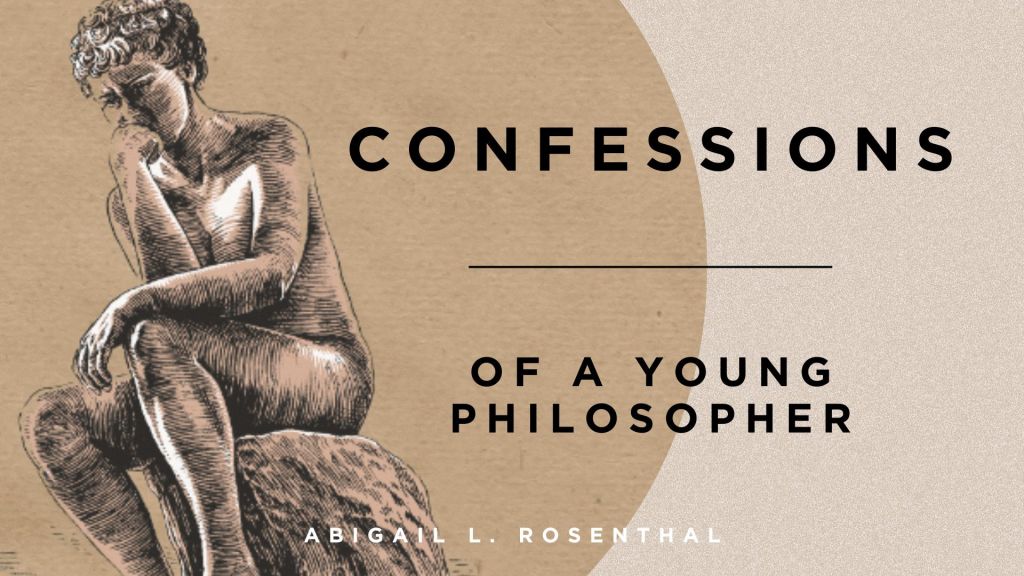
“The Completed ‘Confessions of a Young Philosopher'”
“The Completed ‘Confessions of a Young Philosopher’” Last Sunday, I finished a life work. I mean, finished it to my satisfaction. It’s done – as I always hoped it could be. Some years back, I had published an earlier version … Continue reading
Posted in absurdism, academe, action, alienation, American politics, anthropology, art, art of living, atheism, autonomy, beauty, childhood, Christianity, class, conformism, contemplation, contradictions, cool, courage, cults, cultural politics, culture, desire, dialectic, erotic life, eternity, ethics, evil, existentialism, faith, fashion, femininity, feminism, films, freedom, friendship, gender balance, glitterati, Gnosticism, health, Hegel, hegemony, heroes, hidden God, hierarchy, history, history of ideas, id, idealism, ideality, identity, idolatry, immorality, institutional power, Jews, Judaism, legal responsibility, life and death struggle, literature, love, male power, masculinity, master, memoir, memory, Messianic Age, mind control, modernism, mortality, motherhood, mysticism, nineteenth-century, non-violence, oppression, pacifism, past and future, peace, philosophy, political, political movements, politics, power, propaganda, psychology, public facade, public intellectual, race, relationships, roles, romance, romantic love, seduction, self-deception, sex appeal, sexuality, slave, social climbing, social construction, social conventions, social ranking, sociobiology, spiritual not religious, spirituality, status, status of women, suffering, terror, terrorism, the examined life, the problematic of men, the problematic of woman, the profane, the sacred, theism, theology, time, twentieth century, twenty-first century, Utopia, victimhood, victims, violence, war, work, writing, Zeitgeist
Tagged agents, Augustine’s Confessions, Australian materialists, Bildungsroman, celebrity memoirs, coming-of-age novels, Confessions of a Young Philosopher, critical notice, critics, editors, life work, lost innocence, Marcel Proust, Marcel Proust’s Remembrance of Things Past, marketing, marketing and writing, marketing books, movie stars, narrative nonfiction, novels, plotlines, publishing, rejections, Rousseau’s Confessions, spiritual journey, stolen innocence, teaching tools, tell-all books, the world’s opinion, tough-minded philosophers, validation, vindication, writer as politician, writers, writers' frustration, writing as teaching
2 Comments
“A Forgotten Detour”
“A Forgotten Detour” As I finished the chapter of Confessions of a Young Philosopher that’s about my years as a graduate student at the Columbia University and Penn State departments of philosophy, a missing piece of that time suddenly reappeared, … Continue reading
Posted in Absolute Freedom and Terror, absurdism, academe, action, alienation, American politics, anthropology, art, art of living, autonomy, beauty, Bible, Biblical God, bureaucracy, chivalry, Christianity, cities, class, conformism, contemplation, contradictions, cool, courage, courtship, cultural politics, culture, desire, dialectic, erotic life, eternity, ethics, evil, existentialism, faith, fashion, femininity, feminism, freedom, friendship, gender balance, glitterati, guilt and innocence, health, Hegel, hegemony, heroes, hidden God, hierarchy, history, history of ideas, id, idealism, ideality, identity, ideology, idolatry, immorality, institutional power, Jews, journalism, literature, love, male power, masculinity, memoir, memory, past and future, Phenomenology of the Mind, philosophy, political, political movements, politics, postmodernism, power, presence, psychology, public facade, public intellectual, race, relationships, religion, roles, romance, seduction, self-deception, sex appeal, sexuality, social climbing, social conventions, social ranking, sociobiology, spirituality, status, status of women, suffering, the examined life, the problematic of men, the problematic of woman, theism, theology, time, twentieth century, work, writing, Zeitgeist
Tagged a life problematic, academic ambition, Columbia philosophy department, Columbia Seminar on Hermeneutics, Columbia University, Confessions of a Young Philosopher, Fair Play for Cuba Committee, gender of the mind, graduate assistants, Hannah Arendt, Hegel seminar, Hermeneutics, Jacob Taubes, James Baldwin, John Hermann Randall, jokes about women, Krister Stendhal, New Testament, New York intellectuals, Old Testament, opinion shapers, Paul Kristeller, philosophic apprenticeship, pre-feminist days, predatory professors, Susan Sontag, the beautiful people, the greasy pole, theological bigotry, theology of contempt, truth-seeking, Union Theological Seminary, woman's honor, women graduate students, women philosophers, women philosophy students
1 Comment
For Rabbi Delcau, July 8th, 2016
For Rabbi Delcau, July 8th, 2016 Looking back over our four years with Rabbi Delcau, here are some sides of his presence that will always stand out for me. He has been a font of faith in this temple. If … Continue reading
Posted in absurdism, academe, action, afterlife, alienation, anthropology, art of living, atheism, Bible, Biblical God, bureaucracy, conformism, contemplation, contradictions, cool, courage, cultural politics, culture, desire, dialectic, eternity, ethics, evil, existentialism, faith, freedom, friendship, guilt and innocence, heroes, hidden God, idealism, ideality, identity, idolatry, Jews, legal responsibility, literature, love, martyrdom, masculinity, memory, modernism, mortality, mysticism, non-violence, past and future, peace, political, power, presence, promissory notes, psychology, public facade, reductionism, relationships, religion, roles, self-deception, social conventions, social ranking, spiritual not religious, spirituality, status, suffering, terror, the examined life, the problematic of men, the problematic of woman, theism, theology, time, twentieth century, twenty-first century, work, writing, Zeitgeist
Tagged advocate for Israel, argument from design, balancing books, BDS, Boycott Sanction and Divestment, burning bush, contagion of cynicism, contagion of faith, contagion of pessimism, cynicism, debating Israel, defending Israel, dialogue with God, emotional distance, emotional presence, facing facts, facing the music, Faith, fear and Jews, for such a time as this, God of Israel, God's call, God's micromanaging, gratitude, Hashem, hostile questions, hostility to Israel, insolvency, Israel as home, keeping accounts, moral accounting, Mordecai and Ester, Moses, Moses in Midian, natural faith, pessimism, Presbyterian BDS, proof of God, providence, Rabbi Mitchell Delcau, rabbinic mission, reaping what you sow, Reform Judaism, resentment, speaking to God, Synagogue finances, temple search committee, terror and Jews, The Name, Torah Study, unselfconscious religion
Leave a comment
“Presence”
“Presence” Our rabbi, whom our temple can no longer afford to employ, will be gone in a few more weeks. This Friday, the temple is holding a service in his honor and I am one of those in the lineup … Continue reading
Posted in absurdism, academe, action, afterlife, alienation, American politics, anthropology, art of living, atheism, autonomy, beauty, Bible, Biblical God, chivalry, class, conformism, contemplation, contradictions, cool, courage, cultural politics, culture, desire, dialectic, eighteenth century, erotic life, eternity, ethics, evil, existentialism, faith, fashion, femininity, feminism, freedom, friendship, guilt and innocence, health, heroes, hidden God, hierarchy, history, history of ideas, idealism, ideality, identity, idolatry, immorality, immortality, institutional power, Jews, legal responsibility, life and death struggle, literature, love, male power, martyrdom, masculinity, memoir, memory, mortality, motherhood, mysticism, non-violence, ontology, oppression, pacifism, past and future, peace, philosophy, poetry, political, politics, power, presence, promissory notes, propaganda, psychology, public facade, reductionism, relationships, religion, roles, romance, seduction, self-deception, social conventions, social ranking, sociobiology, spiritual not religious, spirituality, status, suffering, the examined life, the problematic of men, the problematic of woman, theism, theology, time, twenty-first century, Utopia, work, writing, Zeitgeist
Tagged "be here now", "being here now", 1776, absence, America, American covenant, Biblical covenant, biblical criticism, biblical Israel, chagrin, clock time, covenant, Declaration of Independence, employment contract, Eternity, farewells, feminine side of God, Femininity, forefathers, Fourth of July, frustration, hail and farewell, half-absence, higher criticism, History, homesickness, Independence Day, insolvency, Jewish continuity, Jewish memory, Jewish scholarship, Jewish temporality, Jewish theology, Jon D. Levenson, Jon D. Levenson's Sinai & Zion: An Entry into the Jewish Bible, living in the now, loss, maternal love, meditation, memory, moral courage, Mother, past present and future, patriotism, pop psychology, presence, Rabbi, rabbinate, sabbath, Shabbat, Shekinah, spirituality, temporality, Torah Study
4 Comments